





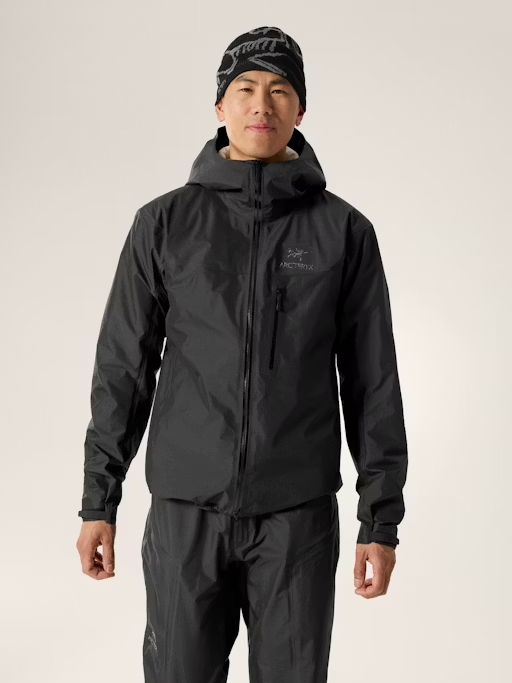
There is a particular kind of jacket that you never leave behind. It sits in the top of every pack, takes up almost no space, weighs almost nothing, and yet somehow manages to handle serious mountain weather without apology. The Arc’teryx Alpha SL is that jacket. After wearing it across alpine ascents, multi-day backpacking trips, and wet coastal trail runs in genuinely unpleasant conditions, it is hard to argue with its reputation as one of the finest ultralight hardshells on the market.
The Arcteryx Alpha SL Jacket — SL standing for superlight — occupies a specific and well-defined niche in the Arc’teryx range. It is not trying to be the most durable hardshell they make (that would be the Alpha SV), nor is it their most featured shell. What it is trying to be is the lightest, most packable serious hardshell money can buy — a jacket you can carry on every trip without feeling the weight, yet reach for in a genuine storm with full confidence. Whether it succeeds at that goal, and whether it justifies its price tag in doing so, is what this review sets out to answer.
What Works
- Exceptional weight-to-protection ratio
- Gore-Tex PRO ePE: serious waterproofing
- Hadron face fabric punches above its denier
- StormHood is genuinely class-leading
- Packs to almost nothing
- RECCO reflector adds real safety value
- Harness-compatible cut
What Doesn’t
- Breathability limited without pit zips
- Trim cut suits athletic builds best
- Hem can ride up during climbing
- Only one external chest pocket
- Very expensive for what you get
First Impressions and What Makes the Alpha SL Different
The first thing you notice when you pick up the Alpha SL is how little it weighs. The men’s version comes in at around 260 grams depending on size — less than a large apple. Fold it up and it fits inside a small stuff sack that disappears into the bottom of a daypack or clips to the outside of a race vest. This is the point of the jacket, and Arc’teryx delivers on it completely. There is no moment when carrying the Alpha SL feels like a compromise.
The current version has been updated to use Gore-Tex PRO ePE with Arc’teryx’s proprietary Hadron face fabric in an ultralight 20D weight. This is a meaningful upgrade from the Gore-Tex Paclite used in earlier versions of the SL, and the step up to a full three-layer construction has improved both waterproofing and breathability noticeably. The PFAS-free construction is also worth noting — Arc’teryx has removed intentionally added PFAS from this jacket, which is a positive development for both environmental and long-term performance reasons.
What the Arcteryx Alpha SL Jacket is not is a do-everything daily driver. It lacks pit zips, has a single chest pocket, and a trim fit that prioritises movement over layering versatility. These are deliberate design choices, not oversights. The jacket exists for fast-and-light objectives where weight and packability come first, and where you are willing to accept certain trade-offs to achieve them.
Waterproofing and Weather Protection
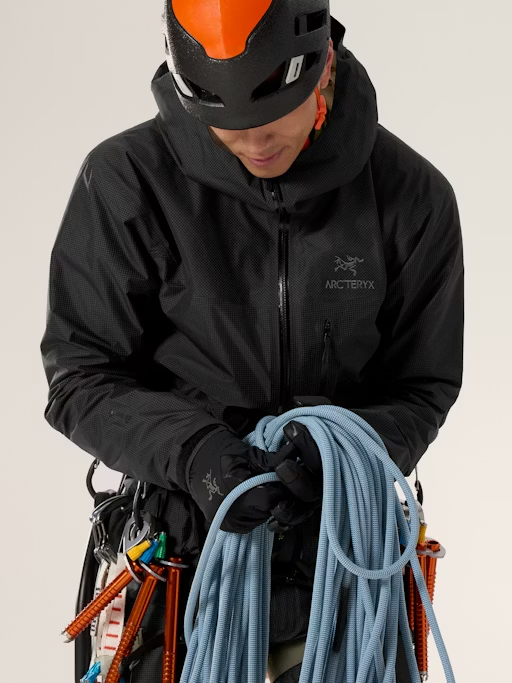
This is where the Alpha SL earns its reputation. Despite its low weight and thin build, the Gore-Tex PRO ePE construction handles serious weather with a composure that belies its minimalist profile. In heavy, sustained rain the jacket simply sheds water. The DWR treatment beads water immediately and consistently, and the fully taped seams ensure there are no weak points for moisture to creep through.
The WaterTight zippers are among the best in the industry. Arc’teryx’s proprietary reverse-coil design creates a reliable seal without the bulk of a traditional flap closure, and in testing they showed no meaningful moisture ingress even in heavy downpours. The single chest pocket uses the same zipper design, which is a small but appreciated detail. Wind resistance is equally impressive — the jacket locks out wind completely, and in exposed conditions at elevation it holds steady without any of the ballooning or pressure you sometimes feel in thinner shells.
“In heavy, sustained rain the jacket simply sheds water — the DWR treatment beads immediately and consistently.”
One thing worth being honest about: the waterproofing of the Alpha SL, while excellent, is not quite at the level of the Alpha SV or the standard Alpha Jacket, both of which use heavier-weight fabrics and more robust constructions. For the vast majority of conditions most people encounter, the SL is more than adequate. For severe, sustained alpine conditions over many days, the heavier jackets earn their weight. The SL sits in the right place for its intended use — serious protection for objectives where you cannot afford extra weight.
Breathability: Honest Assessment
Breathability is the Alpha SL’s most significant compromise, and it is important to go in with realistic expectations. The jacket does not have pit zips, and while the Gore-Tex PRO ePE membrane breathes meaningfully better than the older Paclite fabric it replaced, it still cannot match the ventilation options available in heavier, more featured shells.
For moderate-output activities — hiking at a steady pace, approaching a route, moving through exposed terrain in bad weather — the breathability is adequate. You will stay comfortable without overheating. When the effort increases significantly, such as during a hard climb or a fast mountain run, moisture starts to build up inside the jacket and there is limited ability to dump heat quickly. Unzipping the main zip partway helps, but it is not a full substitute for venting.
This is an accepted limitation of the ultralight hardshell category, and the Alpha SL is one of the better performers within it. If breathability is your top priority, the step up to a jacket with pit zips is worth considering. But for the intended purpose — emergency layer and fast-and-light protection — the breathability is entirely workable.
The StormHood: A Genuine Differentiator
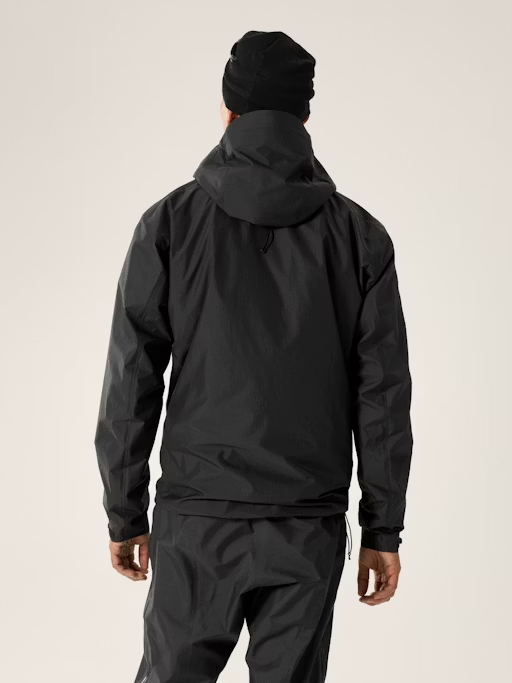
Arc’teryx’s StormHood design is, without exaggeration, the best hood in the hardshell market. It pivots with your head rather than staying static on your shoulders, which means peripheral vision remains unobstructed even when the hood is fully cinched. This sounds like a minor detail until you are navigating technical terrain in a headwind with rain driving horizontally into your face — at which point it becomes genuinely important.
The hood adjusts via a single toggle at the rear that simultaneously tightens the halo and the face aperture. This keeps setup fast and glove-friendly, which matters in the conditions where you are most likely to need it. The laminated brim stiffens to deflect rain away from the face, and the helmet-compatible design fits cleanly over a climbing helmet without excess material billowing around the sides. The overall impression is of a hood that has been designed by people who actually use it in serious conditions rather than by committee.
Fit, Cut, and Layering
The Alpha SL has a trim, athletic fit that Arc’teryx describes as “trim fit.” This translates to a jacket that looks clean and moves well with just a base layer or light mid-layer underneath, but starts to feel constrictive if you try to layer a heavier down jacket beneath it. For the intended use case — fast, light alpine objectives — this is the right call. The articulated patterning gives excellent range of motion, and there is no bunching or restriction during overhead reaching or crouched movement on technical terrain.
The one fit criticism that consistently comes up in testing is the hem length. The jacket is cut shorter to maintain harness compatibility, which is appropriate for climbing use, but during repeated overhead reaching the hem can ride up and leave a gap above the harness waistband. This is a known limitation of the design and one that Arc’teryx has not fully resolved. For non-climbing use it is less of an issue, but climbers should be aware of it.
The cuffs close with Velcro tabs and seal well at the wrist, even with gloves on. The single external chest pocket is large enough for a map, a phone, or a light pair of gloves, and it positions well above a pack’s hipbelt. There is no hand pocket access, which reinforces the message that this is a technical shell, not a casual jacket.
Durability for an Ultralight Shell
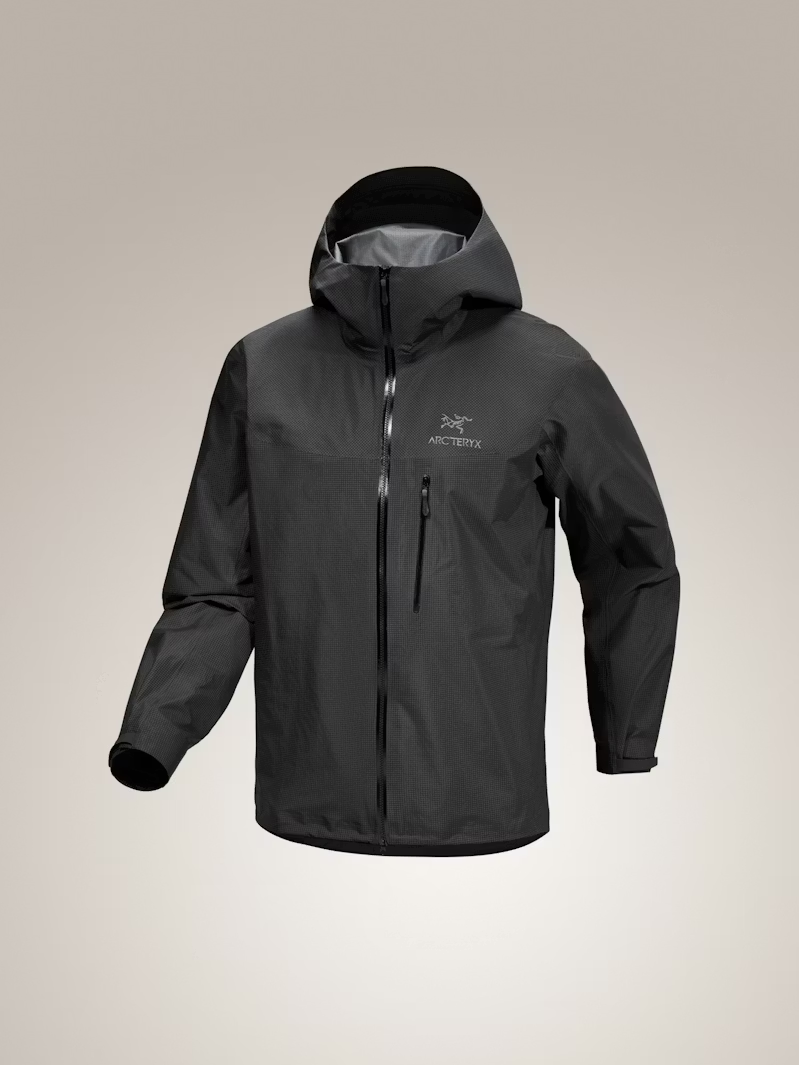
The Hadron face fabric used in the Alpha SL is one of Arc’teryx’s more impressive technical achievements. At 20 denier, it is remarkably thin, and the tightly gridded liquid crystal polymer ripstop construction gives it a resistance to abrasion and snagging that significantly outperforms what you would expect from a fabric this light. In testing, the jacket held up to contact with rock, ice tool shafts, and rough granite surfaces with no damage. The face fabric continued to bead water effectively after months of use, which is a good indicator of long-term DWR retention.
That said, it would be unrealistic to expect the Alpha SL to match the longevity of heavier shells. The fabric is thin by design, and extended hard use in highly abrasive environments will eventually take its toll. Arc’teryx’s customer service and repair programme are excellent and provide some reassurance here — the brand stands behind its products and will repair rather than replace where possible. For the intended use pattern of a go-fast emergency layer, the durability is more than sufficient.
RECCO Reflector: A Small But Important Addition
The current version of the Alpha SL includes an embedded RECCO reflector in the jacket. This is a passive device that requires no battery or activation, and it allows mountain rescue teams using RECCO detectors to locate a person in an emergency, including under snow after an avalanche. It adds no perceptible weight and requires no maintenance. For anyone spending time in serious alpine terrain, this is a meaningful safety addition that has real-world value beyond its marketing.
Who Is the Arc’teryx Alpha SL For?
The Alpha SL is designed for a specific type of person with a specific type of objective. If you are a climber, alpinist, mountain runner, or backcountry traveller who operates in environments where weight matters and conditions can deteriorate rapidly, this jacket makes enormous sense. It is the kind of shell you carry on every trip because the cost of carrying it is near zero, and the cost of not having it in a sudden storm is significant.
It is a less obvious choice for casual hikers who want one versatile jacket for all uses. The limited pockets, trim fit, and absence of pit zips make it less comfortable and less practical for low-output use. Those people would be better served by something from Arc’teryx’s Beta line, which prioritises versatility over pure performance. The Alpha SL is deeply specialised, and that specialisation is both its greatest strength and its main limitation.
Price and Value
The Alpha SL sits at the very top of the hardshell price bracket. It is not cheap by any measure, and anyone approaching it expecting broad everyday value for money will be disappointed. What the price buys is engineering precision — the result of Arc’teryx investing heavily in fabric development, pattern construction, and hardware to reach a level of performance at this weight that no one else has quite matched.
For those who genuinely need what it offers, the value proposition holds up well. A jacket this capable, this packable, and this well-made will last for years with proper care, and the per-use cost over its lifetime is more reasonable than the sticker price suggests. For those who do not regularly venture into conditions that demand this level of protection, the investment is harder to justify and the money would be better spent elsewhere.
Final Verdict
The Arcteryx Alpha SL jacket is one of the most technically accomplished ultralight hardshells available anywhere at any price. It delivers genuine Gore-Tex PRO protection in a package that barely registers in a pack, backed by the best hood in the category and construction quality that sets a standard the rest of the market aspires to.
The trade-offs are real and worth understanding before buying: limited breathability under high output, a trim fit that suits athletic builds, a hem that can ride up during climbing, and a price that demands serious commitment. None of these are flaws in the context of what the jacket is trying to do — they are the natural consequences of its design priorities.
If you spend time in the mountains and you need a serious hardshell that weighs almost nothing, the Alpha SL is the closest thing to a definitive answer the market currently has. It deserves every part of its reputation.