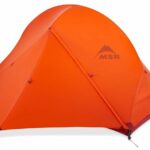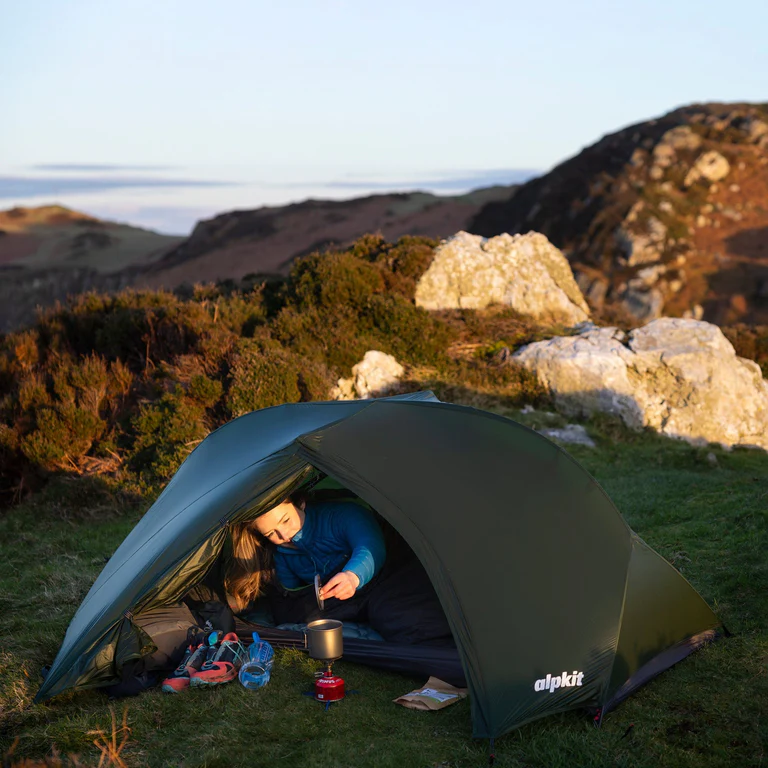



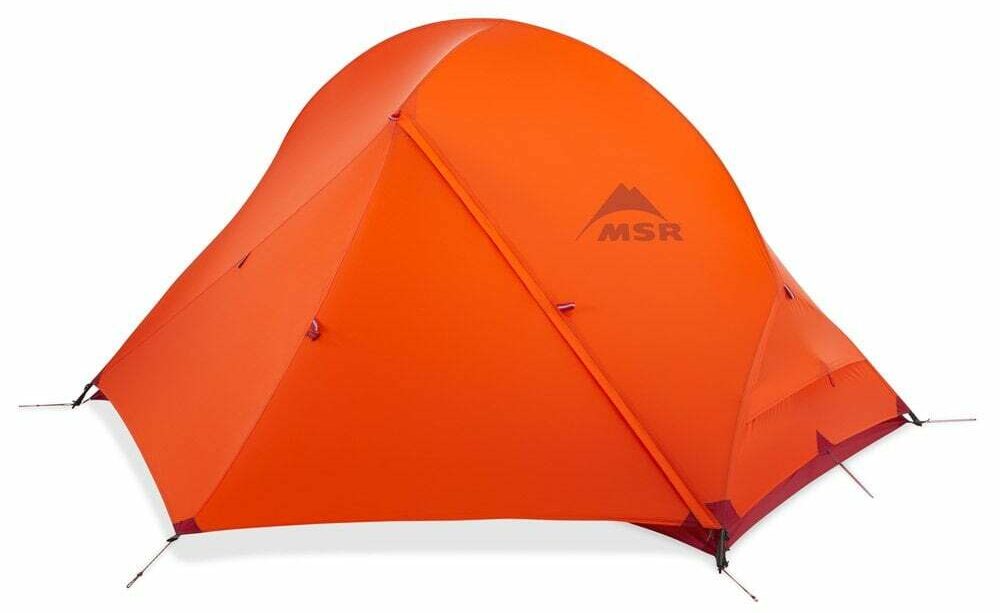
The MSR Access 2 Tent immediately feels like a shelter built for people who spend a lot of time in cold, unpredictable conditions. It sits in that interesting space between a traditional four‑season mountaineering tent and a lightweight three‑season shelter. The moment you handle it, you can tell MSR designed it with a clear purpose: to offer warmth, stability and strength without the bulk that usually comes with winter‑capable tents.
The fabrics feel robust without being overly heavy. The poles are noticeably thicker than those found on MSR’s lighter backpacking tents, and the overall structure feels reassuringly solid. The fly and inner both use materials that strike a balance between insulation and breathability, and the stitching and reinforcements are tidy and consistent. Nothing about the tent feels rushed or cheaply assembled.
Pitching the Tent
Pitching the Access 2 is straightforward once you’ve done it a couple of times. The pole geometry is slightly more complex than MSR’s freestanding three‑season tents, but the process remains intuitive. The poles slot together with a satisfying firmness, and the clips attach quickly even when wearing gloves.
The tent is technically semi‑freestanding, but in practice it behaves much like a fully freestanding shelter. You can get it upright without pegging it out, which is incredibly useful on snow or frozen ground. The fly attaches cleanly and sits taut with minimal adjustment. Even in wind, the tent goes up without drama.
Pitching solo is entirely manageable, though having two people makes the process faster, especially in poor weather. The tent’s structure becomes rigid quickly, which helps when conditions are less than ideal.
Interior Space and Comfort
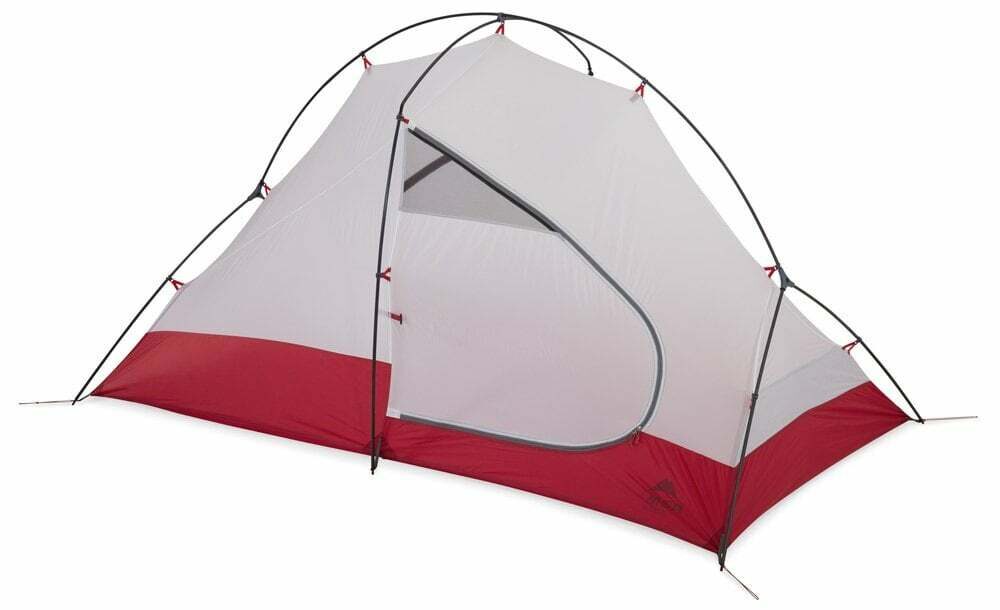
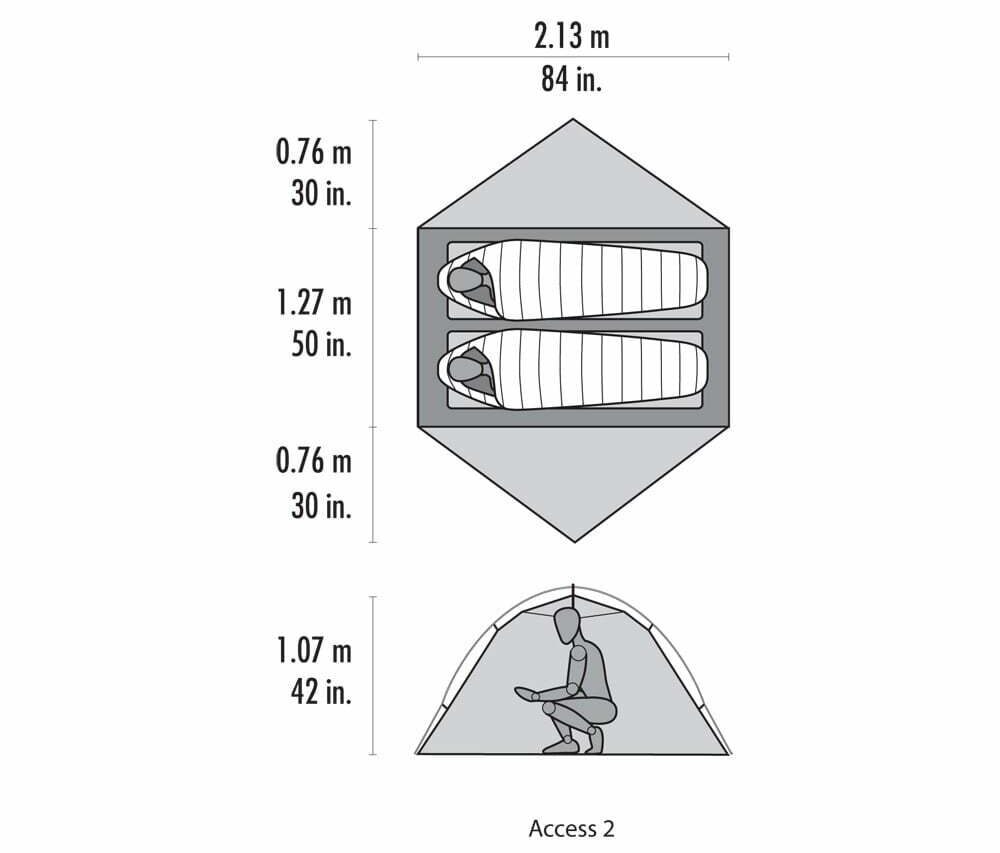
For a winter‑leaning tent, the interior space is surprisingly generous. Two people can sleep comfortably without feeling cramped, and there’s enough headroom to sit upright and move around. The near‑vertical walls help create a more liveable space, which becomes important during long nights or stormy days when you’re stuck inside.
The inner tent uses a mix of solid fabric and mesh. This combination helps retain warmth while still allowing enough airflow to prevent the interior from becoming stuffy. The solid panels also reduce drafts, which makes a noticeable difference in colder environments.
Storage pockets are well‑placed and large enough to keep essentials organised. The vestibules offer enough space for boots, packs and cooking gear, though they’re not oversized. They strike a practical balance between weight and usability.
Weather Resistance
Weather protection is where the MSR Access 2 really shines. It handles wind exceptionally well thanks to its strong pole structure and aerodynamic shape. When properly guyed out, the tent remains stable even in gusty conditions. The thicker poles and reinforced joints inspire confidence when the weather turns rough.
Snow‑loading capability is another standout feature. The tent’s design helps shed snow efficiently, and the poles resist bending under moderate accumulation. While it’s not intended for extreme alpine storms, it performs far better than typical three‑season tents when the temperature drops and snow begins to fall.
Rain protection is equally strong. The fly repels water effectively, and the bathtub floor keeps moisture out even when the ground becomes saturated. The seams are well‑sealed, and the zips remain smooth despite exposure to grit and ice.
Ventilation and Condensation Management
Ventilation is always a challenge in colder‑weather tents, but the Access 2 manages it well. The combination of mesh and solid fabric allows airflow without sacrificing warmth. The vents on the fly are positioned to encourage circulation, and the tent does a good job of reducing condensation build‑up.
In very cold conditions, some condensation is inevitable, but the tent’s structure prevents it from dripping directly onto sleeping bags or gear. The inner fabric dries quickly once the sun comes up or airflow increases.
Weight and Packability
For a tent capable of handling winter conditions, the Access 2 is impressively light. It’s heavier than MSR’s three‑season models, but significantly lighter than traditional four‑season mountaineering tents. This makes it a strong option for people who want winter protection without carrying a shelter that feels like a small bunker.
The packed size is reasonable, and the components can be split between two packs easily. The poles, fly and inner all compress well, and the included stuff sack is practical rather than oversized.
Durability Over Time
After extended use, the Access 2 holds up extremely well. The fabrics resist abrasion, and the poles remain straight and strong. The zips continue to function smoothly even after exposure to snow, ice and repeated freezing and thawing cycles.
The floor fabric is tough enough to handle rough ground, though using a footprint is still a sensible choice if you want to maximise the tent’s lifespan. The fly shows minimal fading, and the waterproof coating remains effective after many trips.
The tent’s structure also maintains its integrity over time. The pole hubs don’t loosen, and the clips and attachment points remain secure.
Practical Features That Matter
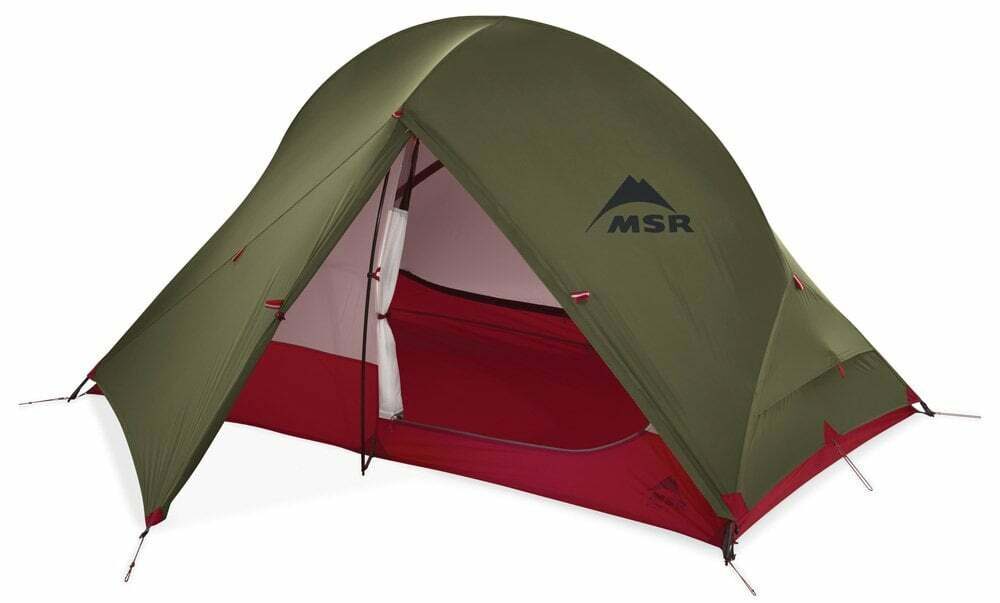
Several thoughtful details make the Access 2 more enjoyable to live with. The dual‑door layout allows each person to enter and exit without disturbing the other. The vestibules, while not huge, are practical and easy to access.
The internal pockets are large enough to store gloves, headlamps and other essentials. The gear loops allow you to hang items to dry or keep them within reach. The fly doors roll back neatly and stay in place without flapping.
The tent’s colour scheme also helps in snowy environments, making it easier to spot in low visibility.
Downsides and Limitations
The Access 2 is an excellent tent, but it’s not without limitations. The price is high, which may put it out of reach for some people. While the quality justifies the cost, it’s still a significant investment.
The tent is warmer than typical three‑season shelters, which is great in cold conditions but can feel stuffy in warmer climates. It’s not the best choice for hot summer trips unless you’re camping at altitude.
The vestibules, while functional, are smaller than those found on some competing models. If you carry a lot of gear, you may find yourself wishing for a bit more storage space.
Finally, while the tent handles snow well, it’s not designed for extreme alpine expeditions. People heading into very harsh winter environments may prefer a full four‑season mountaineering tent.
Who the Tent Suits Best
The MSR Access 2 is ideal for people who want a strong, warm and reliable shelter for cold‑weather trips without carrying the weight of a full expedition tent. It suits backpackers, ski tourers, winter campers and anyone who spends time in environments where temperatures drop and snow is likely.
It’s also a great option for people who want a tent that can handle shoulder‑season conditions where storms and cold nights are common. The balance of weight, strength and warmth makes it versatile enough for a wide range of adventures.
Final Verdict
After extensive real‑world use, the MSR Access 2 Tent stands out as one of the most capable lightweight winter‑leaning shelters available. It offers excellent warmth, impressive stability and reliable weather protection without the bulk of a traditional four‑season tent.
It’s not the cheapest option, and it’s not designed for extreme alpine storms, but for people who want a dependable shelter for cold‑weather trips, it strikes a near‑perfect balance. The build quality, thoughtful design and long‑term durability make it a tent you can trust when conditions turn harsh.
If you’re looking for a lightweight tent that can handle snow, wind and cold temperatures while still being comfortable and easy to live with, the MSR Access 2 is a strong contender.