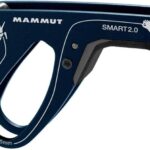




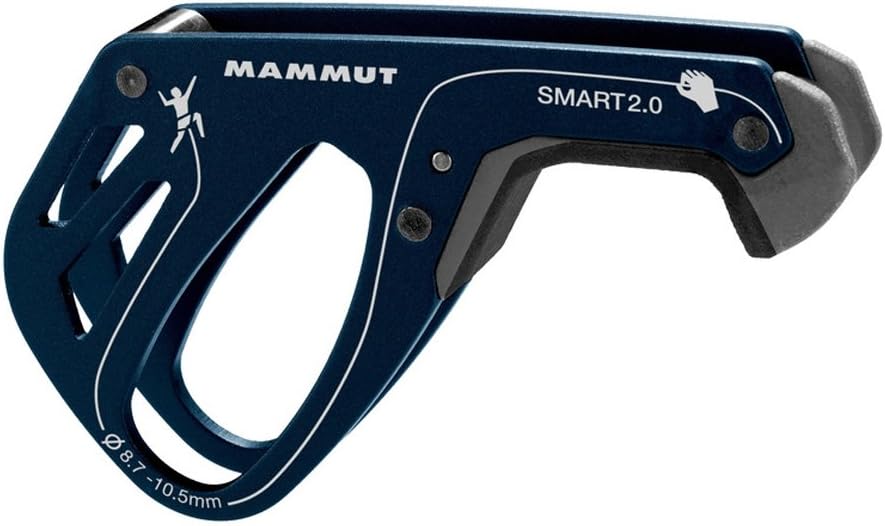
The Mammut Smart 2.0 is an assisted-braking belay device that takes a deliberately simple approach. Instead of using cams, levers, or internal moving parts, it relies on clever shaping, friction, and correct rope handling. This makes it lighter and simpler than many competing devices, but it also places more responsibility on the person belaying.
This balance between simplicity and responsibility is what defines the Smart 2.0. It is not designed to do the work for you. It is designed to support good belay technique while offering an extra margin of braking assistance during a fall. For some people, this is exactly what they want. For others, it may feel demanding.
What the Mammut Smart 2.0 Is
The Mammut Smart 2.0 is an assisted-braking belay device for single rope climbing. It is suitable for indoor climbing, sport climbing, top-roping, and lead belaying. It works with a wide range of modern single rope diameters.
The device increases braking force when the rope is loaded suddenly, such as during a fall. This happens when the rope pulls the device against the locking carabiner, creating friction that helps stop the rope. There are no mechanical parts that move or lock automatically.
It is important to understand that the Smart 2.0 does not lock the rope by itself. A braking hand must always stay on the rope. The device assists braking, but it does not replace active belaying.
Design and Build Quality
The Smart 2.0 uses a combination of high-strength plastic and stainless steel. The plastic body keeps weight low, while the steel insert protects the area where the rope runs. This prevents excessive wear and keeps the rope path smooth.
The overall finish is clean and well thought out. There are no sharp edges, and the rope channels feel smooth and consistent. The device sits neatly against the carabiner and does not twist unpredictably.
Some people are cautious about plastic belay devices, but in practice the material choice works well. The plastic does not feel brittle, even in colder conditions, and it absorbs minor knocks without damage.
Weight and Size
One of the strongest advantages of the Mammut Smart 2.0 is its low weight. It is noticeably lighter than many assisted-braking devices with moving parts. This makes a real difference for people who walk to crags or carry minimal gear.
The compact size also helps. It clips easily onto a harness and stays out of the way while climbing. It does not swing excessively and does not snag on clothing or gear loops.
For climbers who value simplicity and reduced bulk, this is a clear benefit.
Rope Compatibility
The Smart 2.0 works with a broad range of single rope diameters, covering most ropes used for indoor and sport climbing today. Thinner ropes move quickly through the device, while thicker ropes add more friction.
With thinner ropes, smooth handling depends on good technique. Slack feeds easily once the correct hand position is learned. With thicker ropes, the device feels more controlled but slightly slower when paying out slack.
The device does not feel overly sensitive to rope brand or sheath texture, which makes it predictable across different setups.
Paying Out Slack While Lead Belaying
Slack feeding is the area where most people notice the biggest difference compared to cam-based assisted devices. The Smart 2.0 requires deliberate hand positioning to pay out rope smoothly.
At first, this can feel awkward. You cannot simply pull rope aggressively without thinking about braking position. This learning phase is where some people lose confidence in the device.
With practice, the movement becomes natural. Once technique is established, slack can be paid out quickly and safely. Many climbers find that the Smart 2.0 encourages better habits and more awareness of rope control.
It rewards attention rather than rushing.
Braking Assistance During Falls
When a fall happens, the Smart 2.0 engages reliably if used correctly. The rope pulls the device against the carabiner, increasing friction and helping to stop the fall.
The braking assistance is noticeable but not aggressive. Falls feel controlled rather than abrupt, which can be more comfortable for the climber. The device does not fully lock, but it significantly reduces the force required from the braking hand.
This behaviour works well for both top-rope and lead falls. In top-rope situations, the device feels very secure. In lead climbing, attention is more important, especially when belaying someone heavier.
Lowering a Climber
Lowering with the Smart 2.0 is smooth once familiar. There is no handle or lever, so speed control comes entirely from rope handling and braking hand pressure.
This direct control can feel less refined at first, especially for people used to devices with a lowering lever. However, it allows very precise speed adjustment once confidence grows.
Lowering heavier climbers requires focus, but it remains predictable. The device does not grab suddenly or release unexpectedly when used properly.
Learning Curve and Technique
The Mammut Smart 2.0 has a clear learning curve. It is not difficult, but it demands attention. People coming from traditional tube-style devices often adapt quickly. The rope handling principles are similar, with added braking assistance.
Those used to cam-based assisted devices may need more time. The Smart 2.0 does not forgive poor hand placement in the same way.
This makes instruction and practice important. Once learned, the device feels intuitive and controlled. It encourages active belaying rather than passive reliance on equipment.
Durability and Wear
Long-term durability is a strong point. The stainless steel wear surface resists grooving even with frequent use. The plastic body shows cosmetic marks over time but rarely structural damage.
There are no moving parts to jam, wear out, or require maintenance. Dirt and dust have little effect on performance, making it suitable for both indoor walls and outdoor crags.
Routine checks are simple. Visual inspection is usually enough to confirm that the device remains in good condition.
Safety Considerations
The Smart 2.0 provides assisted braking, not automatic locking. This distinction matters. A braking hand must always stay on the rope, and attention must remain constant.
Incorrect use can reduce the braking effect. This means the device is less forgiving of poor technique than some alternatives.
When used as intended, it performs reliably and meets safety standards. When used carelessly, it offers fewer safeguards. This makes it better suited to experienced climbers or supervised learning environments.
Versatility and Limitations
The Smart 2.0 is designed for single rope belaying only. It is not suitable for double ropes, half ropes, or complex multi-pitch systems that require guide mode belaying.
Within its intended use, it performs very well. Outside of that, its limitations are clear.
It works best as an everyday belay device for indoor climbing and sport routes.
Value for Money
The Mammut Smart 2.0 is usually priced below many assisted-braking devices with moving parts. For what it offers, this represents good value.
The combination of low weight, durability, and reliable braking assistance makes it a sensible long-term purchase for many climbers.
Value increases further for those who appreciate simple equipment and are willing to invest time in learning good technique.
Who the Mammut Smart 2.0 Is Best Suited To
The Smart 2.0 suits climbers who want assistance without losing control or awareness. It works well for people who belay frequently and value consistency.
It is a good choice for experienced indoor climbers, sport climbers, and those who prefer lightweight gear.
It is less suitable for complete beginners without supervision or environments where many different people share the same belay device.
Final Thoughts
The Mammut Smart 2.0 is an honest piece of equipment. It does not pretend to replace skill, and it does not hide mistakes behind complex mechanisms. Instead, it supports good belaying while keeping weight and complexity low.
For people who value simplicity, durability, and control, it is a reliable and rewarding belay device. For those who want maximum passive safety with minimal effort, other designs may be more appropriate.
Used correctly, the Smart 2.0 delivers exactly what it promises and encourages better belaying habits over time.