

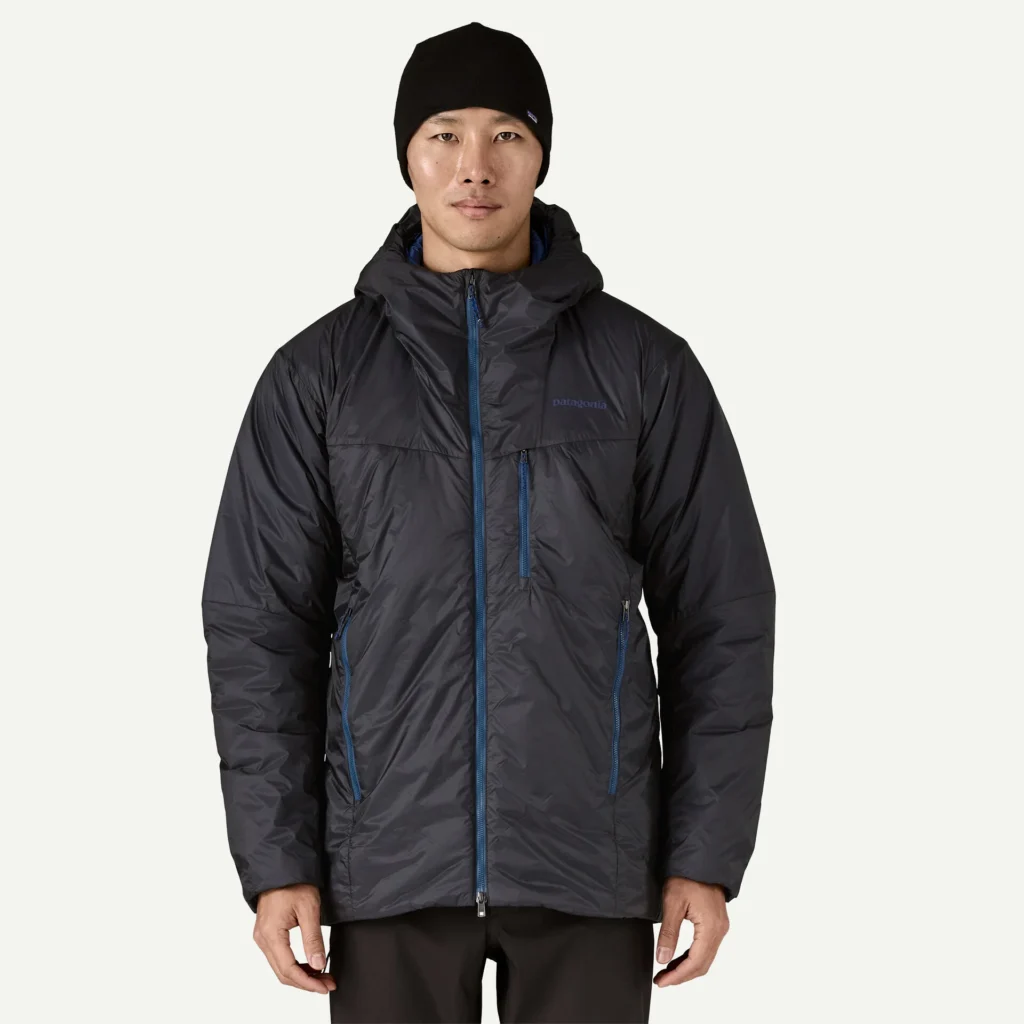
If you spend enough time climbing in cold conditions, you eventually realise that most insulation jackets are designed for movement, not for standing still. The Patagonia DAS Parka sits firmly on the other side of that divide. This is a jacket made for belays, long stances, cold descents, and those drawn-out pauses where the temperature drops fast and the wind finds every gap. After using it repeatedly while climbing, it becomes clear that this is not just a warm jacket that happens to work for climbing, but one that feels purpose-built for it.
Designed With Belays in Mind
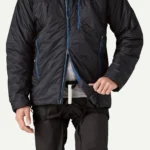
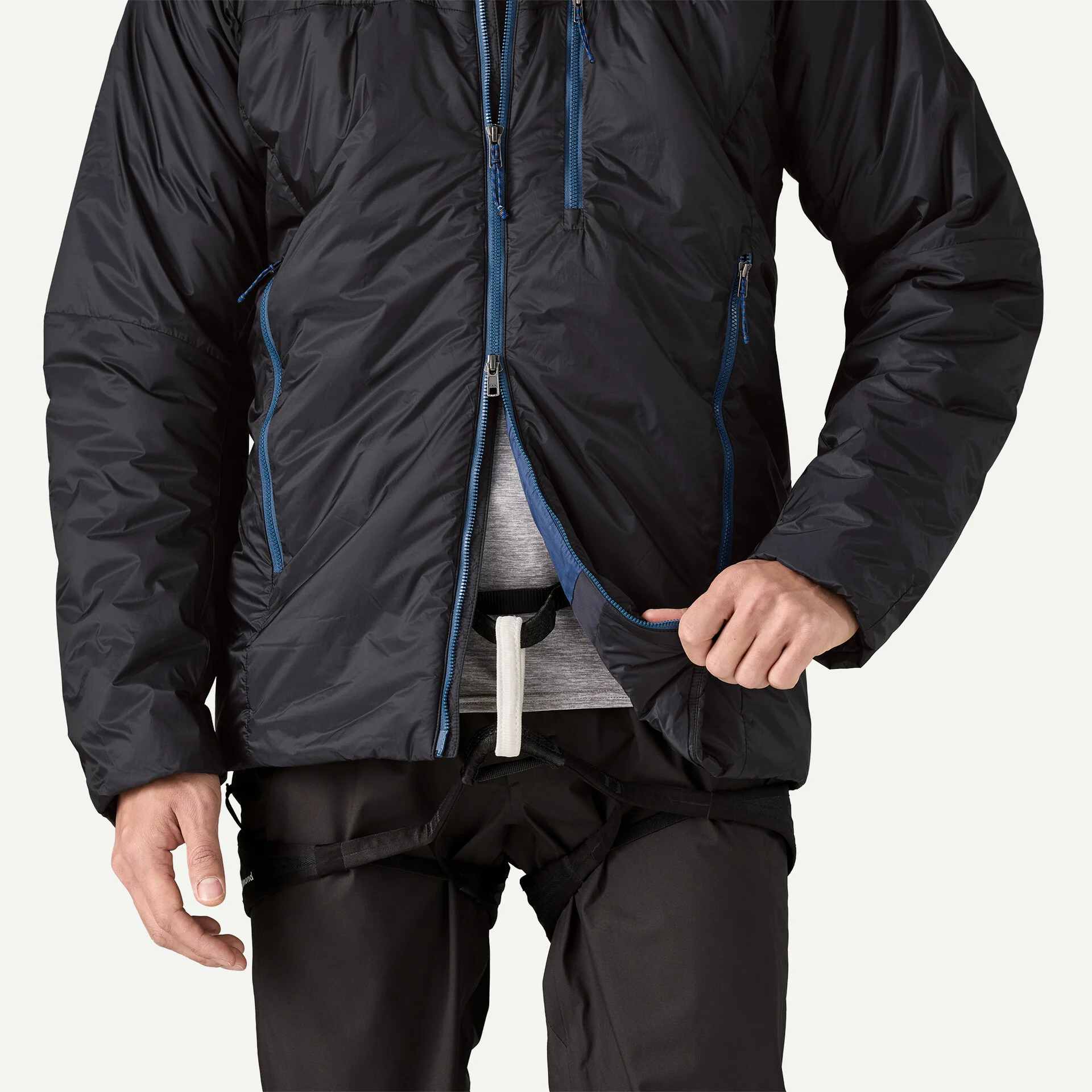
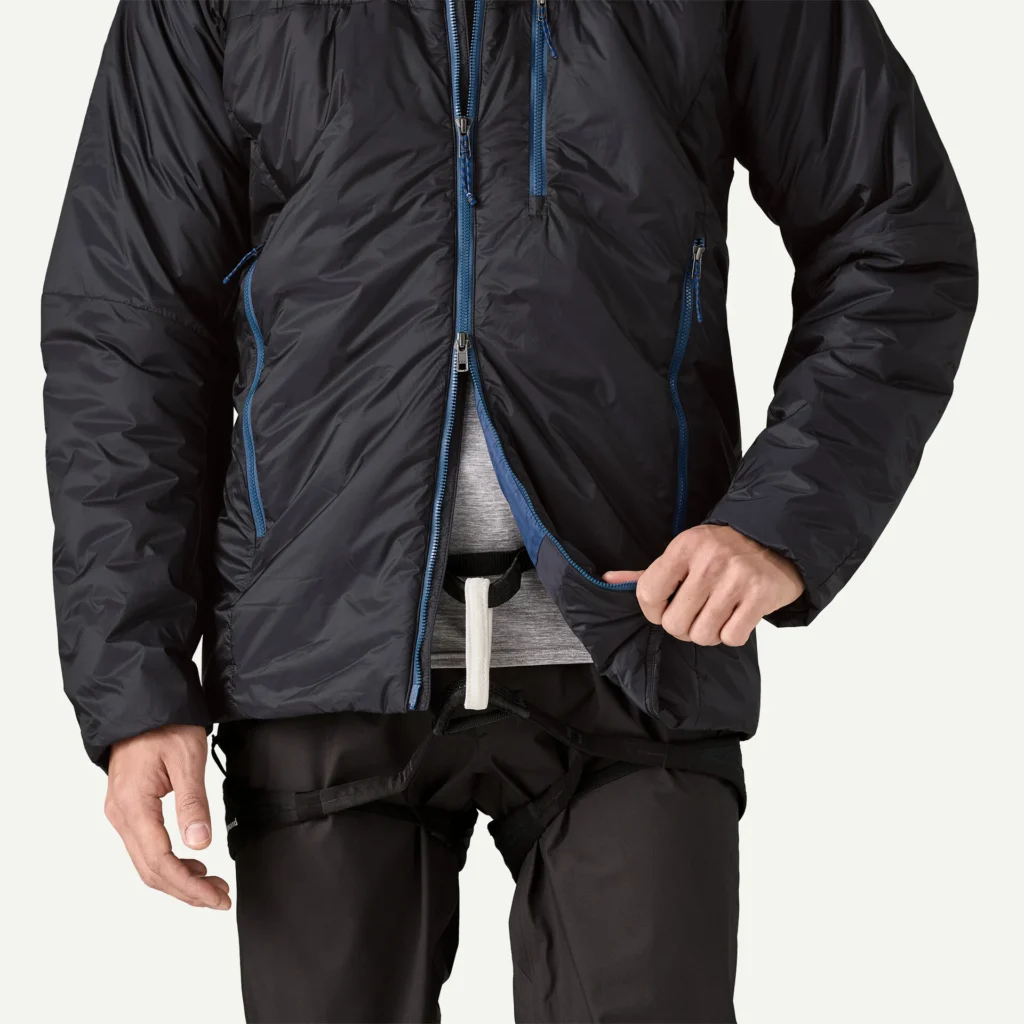
From the first time you pull the DAS Parka over a harness, its intentions are obvious. The cut is generous enough to go on over all your climbing layers without fighting you, yet it still hangs cleanly rather than feeling like an oversized sack. You can throw it on quickly at a stance, zip it up with gloves on, and immediately feel the heat build.
The length is particularly well judged for belaying. It extends far enough to cover the hips and upper thighs, which makes a huge difference when you are standing still on snow, frozen ground, or a small ledge. That extra coverage helps stop warmth leaking away from the core, something that shorter insulated jackets struggle with once you stop moving.
Warmth When You Are Not Moving
Belaying is a strange thermal state. One minute you are climbing hard and generating heat, the next you are completely static while your partner works through a sequence. This is where the DAS Parka really separates itself from lighter insulation layers.
The synthetic insulation traps warmth quickly and evenly. Once on, the jacket creates a stable microclimate that does not collapse the moment a gust of wind hits. Even during long belays in cold conditions, the warmth remains consistent rather than slowly bleeding away.
Because the insulation is synthetic, it continues to perform even when conditions are less than perfect. Damp air, light snowfall, and condensation from hard efforts underneath do not noticeably reduce its effectiveness. For climbing, where weather is often variable and moisture management is never perfect, this reliability matters.
Easy On, Easy Off at the Stance
A good belay jacket should be easy to deploy quickly, and the DAS Parka does this well. The smooth lining allows it to slide over shells and midlayers without snagging. You can pull it on over a rack and harness without needing to reorganise everything first.
The full-length zip is easy to operate with cold or gloved hands, which is not something that should be impressive but still is. There is no wrestling with tiny pullers or awkward alignment. At a cold stance, small annoyances add up quickly, and the DAS Parka avoids most of them.
Once your partner starts moving again, the jacket comes off just as easily. It can be stuffed into a pack or clipped out of the way without fuss.
Hood Performance at Cold Belays
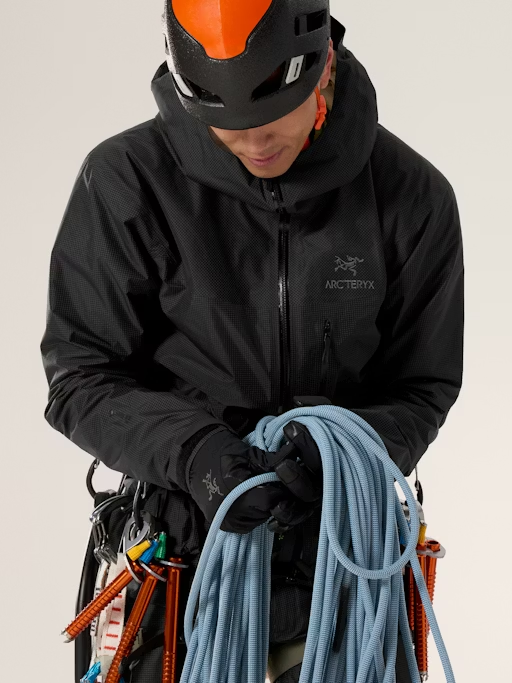
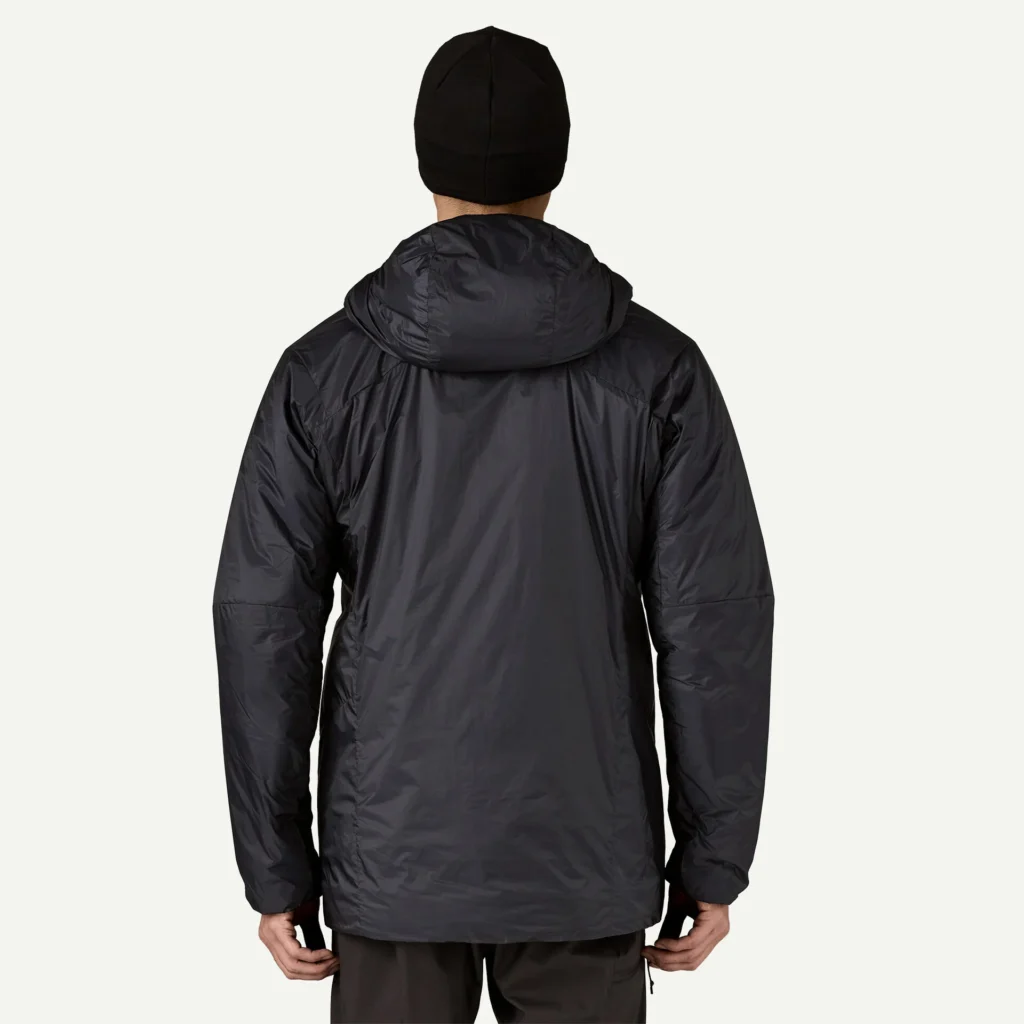
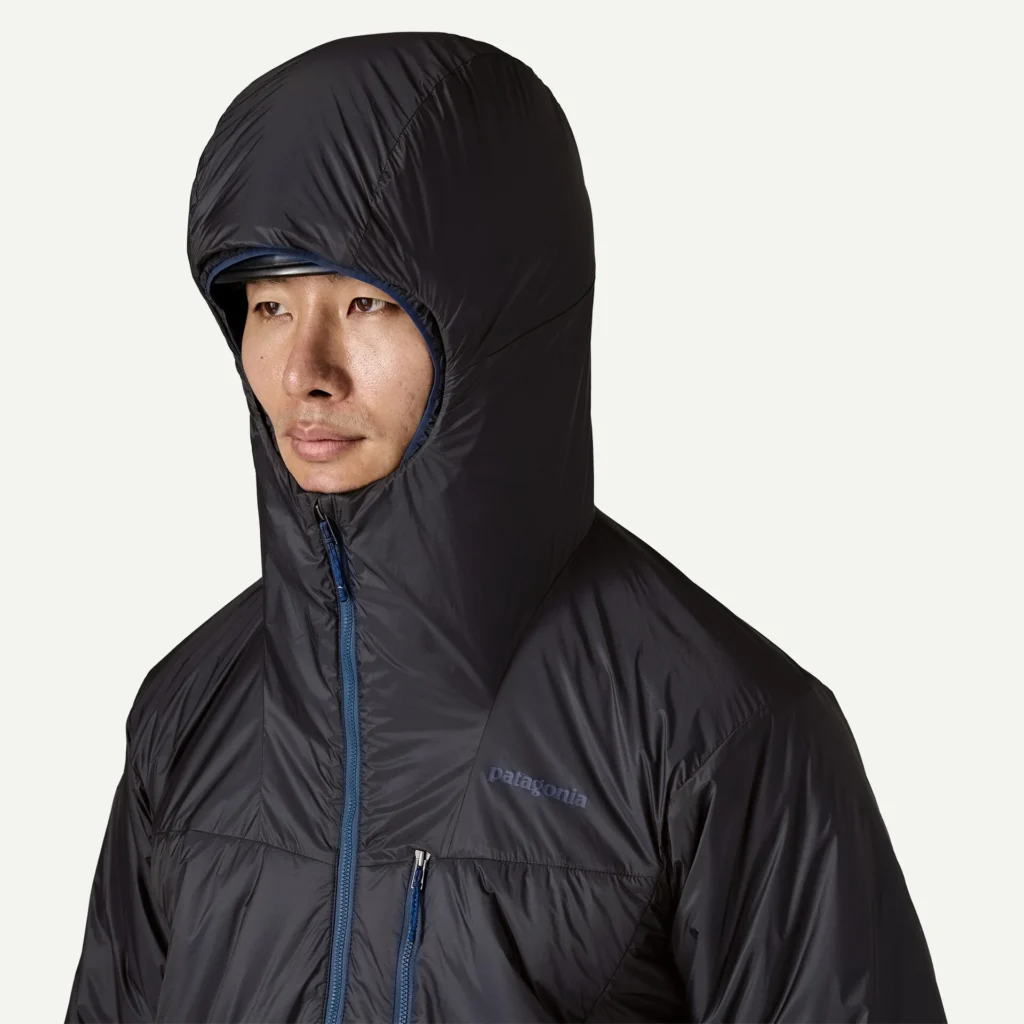
The hood is one of the standout features for climbing use. It is large enough to fit comfortably over a helmet and still insulates properly rather than feeling stretched thin. Once adjusted, it seals in warmth around the head and neck, which is critical when you are exposed and stationary.
When worn without a helmet, the hood cinches down well and does not feel oversized or floppy. The adjustment points are intuitive and usable with gloves, making it easy to fine-tune the fit at a stance without removing layers.
Importantly, the hood moves with your head rather than blocking vision. This makes it practical when you need to keep an eye on your partner or manage ropes without constantly readjusting.
Wind Protection on Exposed Stances
Belays are often positioned in the worst possible places from a weather perspective. Exposed ridges, hanging stances, and narrow ledges tend to catch wind relentlessly. The outer fabric of the DAS Parka does an excellent job of blocking wind, preventing that slow, chilling effect that creeps in even when temperatures are not extreme.
The jacket is not a hard shell, but for typical climbing conditions it does not need to be. Snow brushes off easily, and brief spells of light precipitation are not an issue. Combined with a shell underneath, it creates a very effective barrier against cold, windy conditions.
Pockets That Actually Work With a Harness
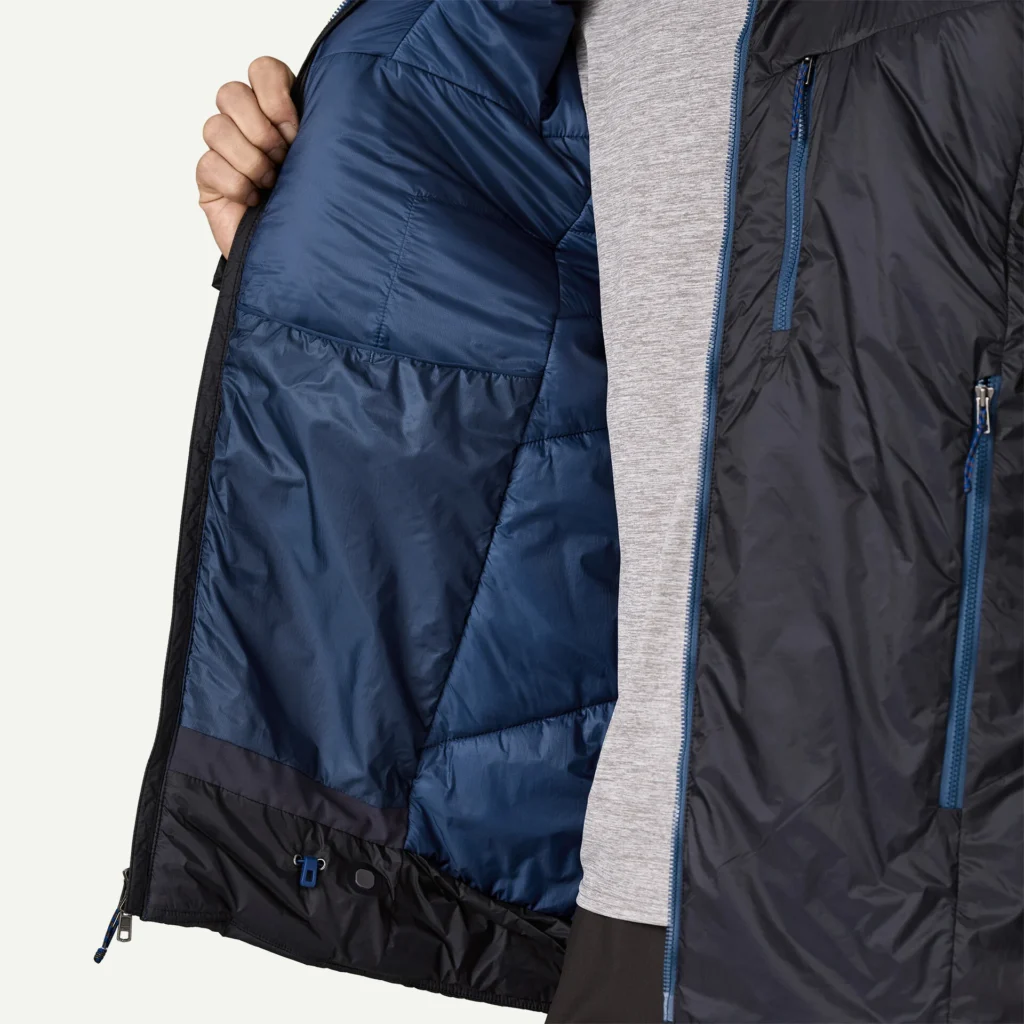
Pocket placement is often an afterthought on insulated jackets, but here it is clearly considered. The hand pockets are positioned high enough to remain accessible when wearing a harness. This makes a real difference when you want to warm your hands at a stance or stash gloves temporarily.
The pockets are generously sized and insulated, adding another layer of comfort during long belays. Internal pockets are useful for keeping items like phones or spare batteries warm, which can be essential during cold climbing days.
Nothing feels redundant or badly placed. Every pocket has a clear purpose in a climbing context.
Freedom of Movement When You Need It
Despite its warmth and bulk, the DAS Parka does not feel restrictive. The cut allows enough room through the shoulders and arms to manage ropes, clip anchors, and sort gear without feeling trapped.
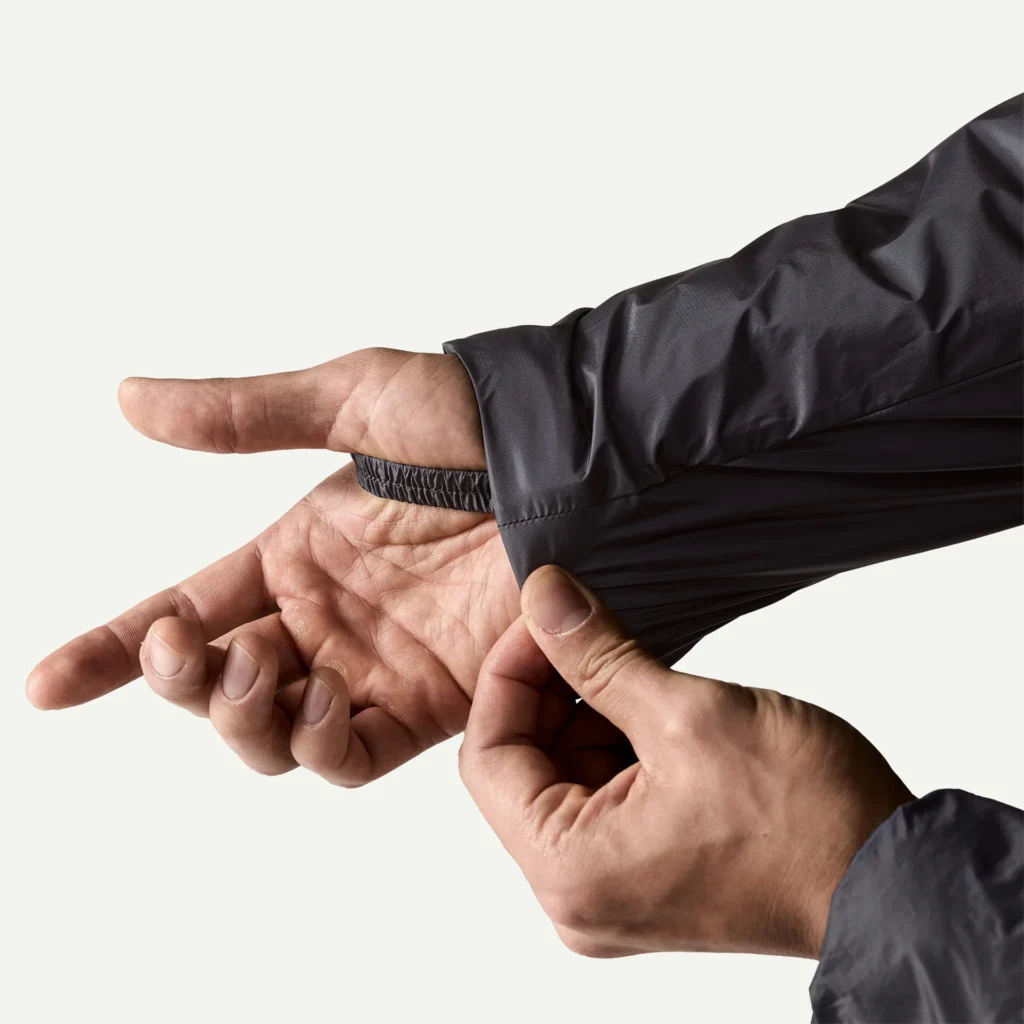
Sleeve length is spot on for climbing. The cuffs cover the wrists properly without riding up when reaching overhead or handling ropes. This helps keep warmth in and prevents cold air sneaking in during repetitive movements at a belay.
It is not a jacket you would want to climb hard pitches in, but that is not its role. For belaying, stance management, and cold descents, the mobility is more than sufficient.
Breathability Between Belays
While the DAS Parka is designed for static warmth, it handles short bursts of movement reasonably well. Walking between routes, scrambling down, or moving around a cold base does not immediately turn it into a sweat box.
That said, it is still a very warm jacket. If you try to hike uphill aggressively in it, you will overheat. Used as intended, thrown on at belays and taken off when climbing, the breathability is appropriate and predictable.
Packability on Multi-Pitch Routes
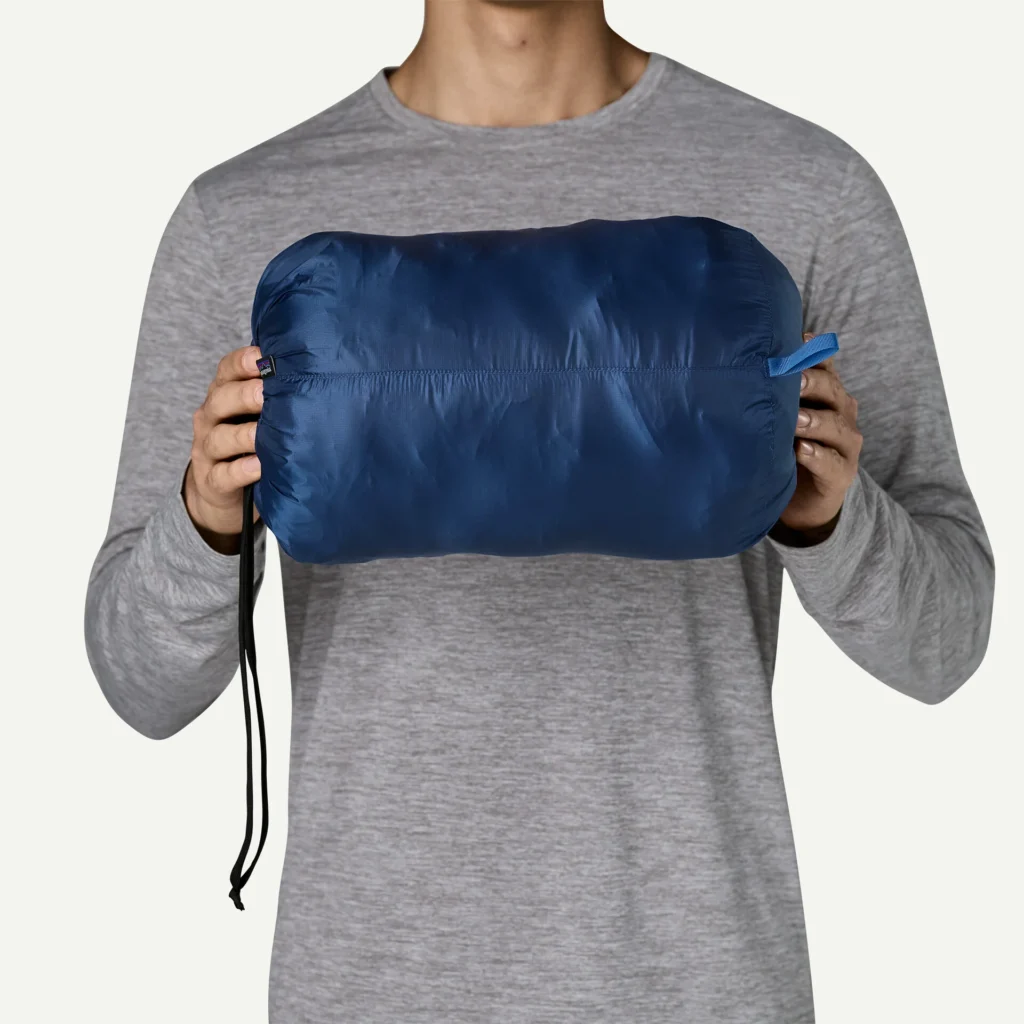
The DAS Parka is not ultralight, and it is not trying to be. Compared to minimalist belay jackets, it takes up more space in the pack. However, for the level of warmth it provides, it compresses reasonably well.
On multi-pitch routes where cold belays are expected, the trade-off feels worthwhile. Carrying a slightly bulkier jacket is easier to justify when it means staying warm and functional for hours rather than shivering through every stance.
Durability for Regular Climbing Use
Climbing gear gets abused, and the DAS Parka feels built for that reality. The outer fabric resists abrasion from rock, packs, and repeated stuffing. After extended use, it holds its shape well, and the insulation maintains its loft.
Zips continue to run smoothly, stitching remains solid, and there are no obvious weak points. This durability is particularly valuable for climbers who rely on the same jacket season after season rather than replacing gear frequently.
Synthetic Insulation and Moisture Management
One of the biggest advantages of the DAS Parka for climbing is its synthetic insulation. On long days out, moisture is almost unavoidable, whether from snow, spindrift, or sweat from hard leads underneath. Synthetic insulation retains warmth even when damp, which provides a level of security that down struggles to match in these conditions.
This makes the jacket more forgiving and more reliable, especially on mixed days where conditions change rapidly.
Long Days, Cold Descents, and Camp Use
Beyond belays, the DAS Parka shines during cold descents and at camp after a long climbing day. When energy levels drop and the temperature follows, having a jacket that instantly delivers warmth makes a noticeable difference.
It is the kind of jacket you reach for at the end of the day without thinking, because you know it will work.
Final Thoughts for Climbers
The Patagonia DAS Parka feels like a jacket designed by people who understand what it means to stand still in the cold while climbing. It prioritises warmth, reliability, and practical design over weight savings or visual appeal.
For climbers who regularly deal with cold belays, exposed stances, and long days in harsh conditions, it is a dependable piece of kit that earns its place in the pack. It is not subtle, not lightweight, and not designed for constant movement, but for its intended role it performs exceptionally well.
This is a belay jacket you can trust when conditions are uncomfortable and mistakes are costly, and that confidence alone makes it a standout choice.